Trying to choose between Lake Oswego and West Linn? If you are relocating, upsizing, or simply narrowing your search in the south metro area, that decision can shape your daily routine as much as your home itself. The good news is that both cities offer strong appeal, but they deliver different lifestyle experiences. This guide will help you compare housing, commute patterns, parks, schools, and community feel so you can decide which one fits you best. Let’s dive in.
Lake Oswego vs West Linn at a Glance
Lake Oswego is the larger of the two cities, with a 2024 population estimate of 40,029. West Linn is smaller, with 26,597 residents. In practical terms, that often means Lake Oswego feels more built out and amenity-rich, while West Linn tends to feel more residential and spread out.
The housing numbers also point to a meaningful difference. Lake Oswego’s 2020-2024 ACS median owner-occupied home value is $932,200, compared with $770,200 in West Linn. Average commute time is slightly shorter in Lake Oswego at 21.6 minutes, compared with 24.3 minutes in West Linn.
Housing Style and Price Points
Lake Oswego offers more housing variety
Lake Oswego has a more mixed housing profile than West Linn. City housing analysis estimates that about 70% of its homes are single-family and about 30% are multi-family, with roughly 64% owner-occupied. That can give you more flexibility if you want to compare detached homes with townhomes, condos, or other attached options.
Pricing also trends higher in Lake Oswego. Zillow’s March 2026 typical home value was $882,925, and homes were going pending in about 34 days. If your priority is access to a wider range of housing types in a higher price tier, Lake Oswego may feel like the better fit.
West Linn leans more detached-home
West Linn is much more heavily weighted toward detached housing. Its 2024 housing needs analysis estimates that more than 81% of units are detached single-family homes, about 83% of occupied units are owner-occupied, and around 90% of owner-occupied homes are detached. Recent permitting has also skewed toward new single-family construction.
Zillow’s March 2026 typical home value in West Linn was $777,229, with homes going pending in about 37 days. If you picture a more traditional detached-home setting with a somewhat lower typical price point than Lake Oswego, West Linn may line up better with your goals.
Schools and District Structure
Lake Oswego has a city-focused district
Lake Oswego School District says it serves about 6,860 students across 11 schools. Those include six neighborhood elementary schools, one world-language immersion elementary, two middle schools, two high schools, and one regional recovery charter school. The district also reports a 97% graduation rate and 53 languages spoken.
For many buyers, the key point is not just school count but district structure. Lake Oswego’s district is closely tied to the city itself, which can make the school system feel more city-centered when you are evaluating neighborhoods, boundaries, and daily routines.
West Linn is part of a broader district
West Linn is served by the West Linn-Wilsonville School District, which covers 42 square miles and serves more than 8,000 students. The district includes West Linn, Wilsonville, and rural Clackamas County areas, with nine primary schools, four middle schools, and three high schools.
That broader footprint can matter when you are comparing home search areas and school commute patterns. If you prefer a district that is tied more tightly to one city, Lake Oswego may stand out. If you are comfortable with a multi-community district, West Linn offers that wider structure.
Commute and Transportation
Lake Oswego has a transit center advantage
Lake Oswego says it has 178 miles of streets and an excellent road system. Highway 43 runs through the east side of town, and TriMet provides bus service through the Lake Oswego Transit Center, which connects to lines 35, 37, 78, and 153. The city also offers transportation through the Adult Community Center for older adults and disabled adults.
From a lifestyle standpoint, Lake Oswego’s dedicated transit center adds convenience. Combined with its slightly shorter average commute time, that may appeal if you want more direct connections and a bit less time on the road.
West Linn is more corridor-based
West Linn’s transportation planning documents describe Highway 43 as a regional commuter route and identify congestion as a high-priority issue. TriMet routes serving the area include 76-Hall/Greenburg and 153-Stafford/Salamo, which connects West Linn with the Lake Oswego Transit Center.
That setup makes West Linn feel more tied to key commuting corridors, especially Highway 43 and I-205 travel patterns. If your routine depends on those regional routes, West Linn may still work well, but it tends to feel less transit-centered than Lake Oswego.
Parks, Trails, and Outdoor Time
Lake Oswego blends parks with programming
Lake Oswego Parks & Recreation manages more than 600 acres of park and open space, plus more than 45 acres of recreation facilities. The department averages about 1,800 recreation programs and 85 community events each year, and it also notes more than 460 acres of natural character parks.
Some of the city’s best-known spaces add to that active feel. George Rogers Park offers river access, fields, courts, and trails. Foothills Park includes a riverfront amphitheater and summer concerts, while Millennium Plaza Park hosts the Saturday farmers market, Movies in the Park, and Moonlight & Music.
West Linn emphasizes trails and river access
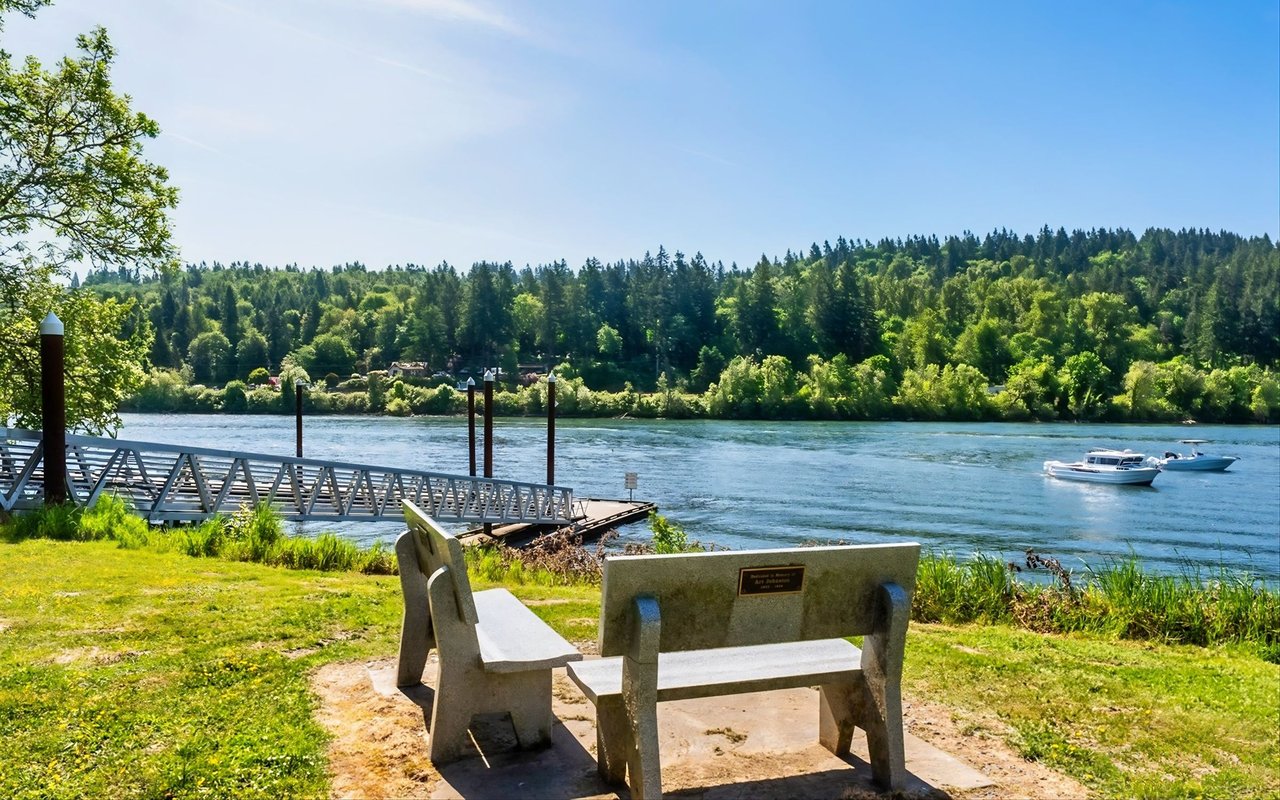
West Linn also has a substantial park system, with more than 600 acres of park land within 7.39 square miles and 17 active parks. Mary S. Young Park is about 128 acres and includes 5 to 8 miles of trails plus an off-leash area. Willamette Park and Bernert Landing total 22.5 acres with river access, a boat ramp, fields, a playground, and a wading pool.
If your ideal weekend includes trail time, river access, and a more nature-centered routine, West Linn has a strong case. Its park system feels especially compelling if outdoor space is one of your top decision points.
Arts, Events, and Community Feel
Lake Oswego has a strong arts presence
Lake Oswego stands out for its arts and cultural programming. The city highlights Gallery Without Walls, the Lakewood Center for the Arts, and the annual Lake Oswego Festival of the Arts, which draws about 25,000 visitors each June.
That creates a community feel that is polished, active, and event-forward. If you enjoy public art, seasonal programming, and a downtown atmosphere with regular activity, Lake Oswego may feel more aligned with your lifestyle.
West Linn leans historic and local
West Linn’s community identity has a different tone. The city sponsors the annual Old Time Fair at Willamette Park, hosts Music in the Park on summer Thursday nights, and maintains the Willamette Historic District, which is listed on the National Register and includes 38 officially designated historic properties.
That gives West Linn a more historic and tradition-oriented feel. If you are drawn to a smaller-city atmosphere with deep local character and riverfront history, West Linn may feel more personal and grounded.
Which City Fits Your Lifestyle?
If you want a more amenity-rich setting, more housing variety, a city-focused school district, and a strong arts and events scene, Lake Oswego may be the better match. It also carries the higher typical home values of the two markets, which is important to factor into your search from the beginning.
If you want a more detached-home oriented market, extensive parks and trail access, a historic small-city feel, and a somewhat lower typical home value, West Linn may fit you better. It tends to appeal to buyers who place outdoor space and a more residential feel high on their priority list.
Neither choice is universally better. The right answer depends on how you want your days to look, how you plan to commute, and what kind of home setting feels most natural to you.
When you are comparing two strong markets like these, local guidance can make the difference between a good choice and the right one. If you want help weighing neighborhoods, home styles, and current opportunities in Lake Oswego or West Linn, Lisa Hanna can help you build a strategy that fits your lifestyle and goals.
FAQs
What is the main lifestyle difference between Lake Oswego and West Linn?
- Lake Oswego generally feels more amenity-forward and arts-centered, while West Linn tends to feel more residential, historic, and trail-oriented.
How do home prices compare in Lake Oswego and West Linn?
- Lake Oswego has the higher typical price point, with a 2020-2024 ACS median owner-occupied value of $932,200 versus $770,200 in West Linn.
What is the difference between Lake Oswego and West Linn housing types?
- Lake Oswego has a more mixed housing profile, while West Linn is more heavily made up of detached single-family homes.
How do school districts differ in Lake Oswego and West Linn?
- Lake Oswego has a city-focused school district, while West Linn is part of the broader West Linn-Wilsonville School District that serves multiple communities.
Which city has better parks and outdoor access, Lake Oswego or West Linn?
- Both cities have more than 600 acres of park land, but West Linn is especially strong if you prioritize trails, river access, and a more outdoors-centered setting.
Is commuting easier from Lake Oswego or West Linn?
- Census data shows a slightly shorter mean commute time in Lake Oswego at 21.6 minutes, compared with 24.3 minutes in West Linn.