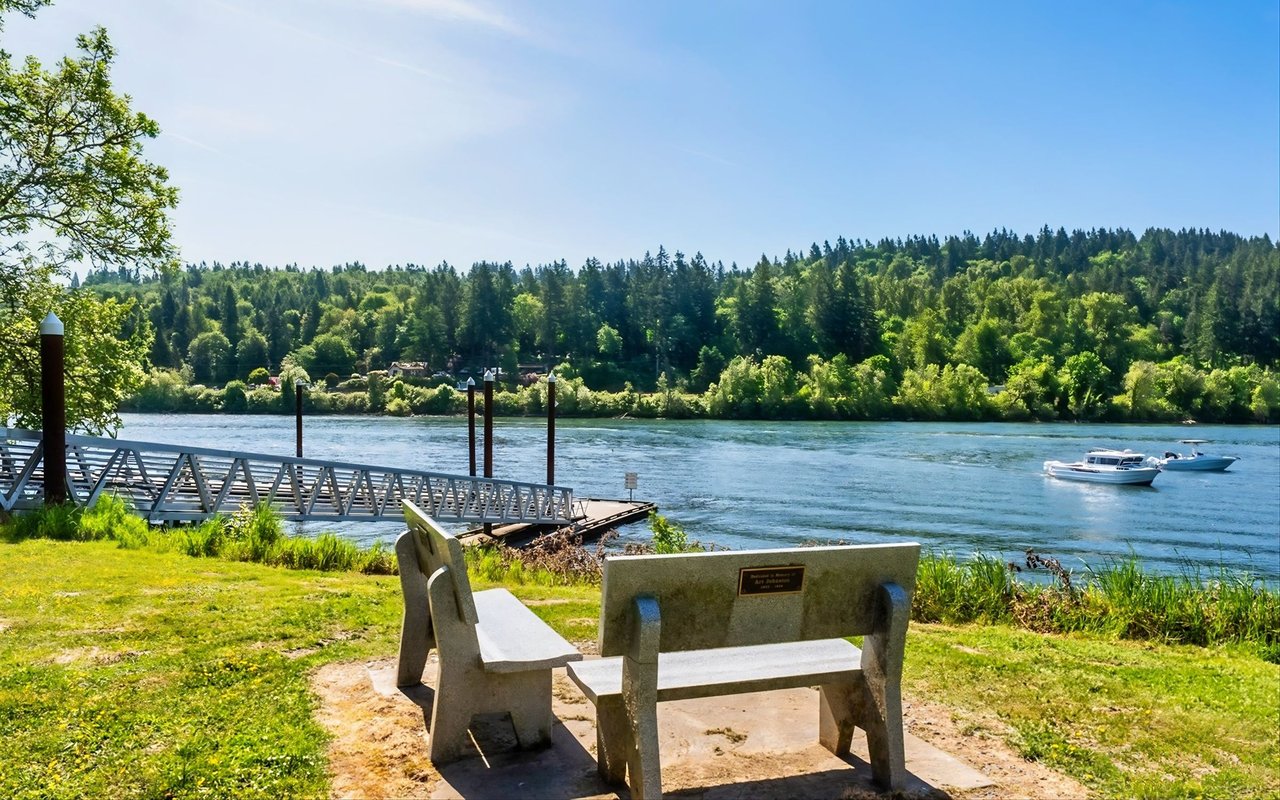
Wondering whether a Lake Oswego home comes with lake access just because it is near the water? In this market, that assumption can lead to expensive surprises. If you are buying a home in Lake Oswego, it helps to understand how lake rights, HOA-style obligations, and easement memberships actually work before you make an offer. Let’s dive in.
Lake access is not automatic
In Lake Oswego, being close to Oswego Lake does not automatically give you lake rights. According to the Lake Oswego Corporation, or LOC, lake access privileges are tied to recorded historical instruments and cannot be sold, purchased, or transferred separately from the property.
That means a lake-view home or even a lake-adjacent home may not include access. The only way to know is to verify the recorded chain of title for that specific property.
Who manages Oswego Lake
The Lake Oswego Corporation plays a major role in how private lake access works. LOC says it manages Oswego Lake, owns 20 lakeside properties used for access, and serves more than 3,000 homes whose residents may be eligible for lake access privileges.
LOC also says it was formed in 1942, when Oregon Iron and Steel deeded the lake bed, rim property, and related parcels to the corporation. Today, annual assessments and license fees help fund safety patrols, water-quality work, dredging, dams, and marina operations.
Because LOC manages use and operations, it also enforces rules. Its published rules allow the corporation to impose restrictions, fines, and other sanctions when needed.
Public access versus private access
There is an important difference between public lake entry and private lake privileges. If you are comparing homes in Lake Oswego, this distinction matters.
City public entry rules
The City of Lake Oswego now manages a public entry point at Lower Millennium Plaza Park. The city says entry and exit are allowed only at the concrete platforms, only during hours from one hour before sunrise to one hour after sunset, and only for nonmotorized watercraft.
The city also says this entry point may close for safety reasons or special events. So while public access exists, it is limited and should not be confused with the broader privileges tied to certain private properties.
Private lake privileges
Private access works differently. LOC says privileges are granted to occupants of certain shoreline lots and some upland subdivisions, based on recorded property rights.
If you want access for boating, swimming, or use through a private easement area, you need to confirm that the home actually carries those rights. This is especially important if your goal is more than occasional paddling.
How HOAs and easement associations fit in
Many buyers hear the term HOA and assume there is only one layer of membership. In Lake Oswego, lake-related ownership can involve more than one organization.
Oregon law treats a homeowners association as the organization of lot owners in a planned community. In general, these associations handle shared maintenance, insurance, and other common expenses.
For lake access, you may also encounter a separate easement association. LOC says each easement lot has its own bylaws and its own Easement Association, approved by the LOC Board of Directors and often run by volunteer members.
That means you may be dealing with:
- A neighborhood HOA
- An easement association
- LOC membership fees or licensing
- Additional charges for slips or storage
Understanding which group does what can help you avoid confusion later.
Costs can vary more than buyers expect
Lake access costs are not one-size-fits-all. They can vary by easement, by type of water use, and by the amenities offered.
LOC’s current easement information shows that some clubs include features such as boat slips, kayak or paddleboard racks, restrooms, electricity, Wi-Fi, and waitlists. It also shows that dues can differ significantly. For example, Uplands lists annual membership dues of $475, while Forest Hills lists annual dues of $775.
LOC’s 2026 fee page also lists separate membership categories and fees, including:
- Swim-only or non-power: $228
- Power-boat: $1,566
- Shared power-boat: $1,321
In practice, you may need to budget for several layers of cost at once. Those can include HOA dues, easement dues, LOC fees, and separate slip or rack fees.
What to verify before making an offer
If lake access is important to you, due diligence should start before you write an offer. A good listing description or a home’s location near the water is not enough.
Confirm recorded lake rights
Start by confirming whether the parcel has recorded lake privileges. LOC says its lookup process is based on the street number and historical recorded instruments.
It is also important to confirm how those rights apply. LOC says a resident must live in the home with granted access in order to be a member of an easement.
Review the governing documents
Ask for the full set of documents that affect ownership and use. That may include:
- Easement bylaws
- LOC rules
- HOA documents, if applicable
- Current budget
- Reserve information
- Recent meeting minutes
- Any special assessment information
Oregon law requires HOA-style associations to keep records, and owners have a legal right to examine them. Reviewing these documents can help you understand not just costs, but also how the community operates.
Check permit history for docks and shoreline work
If a home has a dock, lift, or other lake-adjacent improvement, ask about approvals. LOC rules state that a Facility Permit is required before building or changing facilities adjacent to or over the Rim Property or lake.
That makes permit history an important part of your review, especially for waterfront or lake-rights properties where future improvements may matter to you.
Verify balances and good standing
This step is easy to overlook, but it matters. LOC rules state that boat and operator licenses are not issued when a shareholder or easement member is behind on a corporation assessment or is not in good standing with the easement association.
For buyers, that makes balance verification a smart closing item. You want to know whether unpaid assessments could affect your ability to use the lake as expected.
Questions to ask about lake access
When you are evaluating a home in Lake Oswego, these are some of the most useful questions to ask:
- Does this property have recorded lake privileges?
- Can the title company confirm those privileges?
- Which organizations apply to this home: HOA, easement association, LOC, or more than one?
- What are the annual dues, fees, and any special assessments?
- What amenities are included with the membership?
- Are there waitlists for slips, racks, or storage?
- Are there seasonal restrictions or event-related closures?
- Is any dock or shoreline work already approved?
A clear answer to each of these questions can help you compare homes more accurately.
Why local guidance matters in Lake Oswego
Lake access in Lake Oswego is more detailed than many buyers expect. It can involve recorded property rights, association bylaws, LOC rules, city public-entry rules, and Oregon marine requirements for water use.
That is why local expertise matters. When you understand the details before making an offer, you are in a much better position to choose the right property, budget realistically, and avoid surprises after closing.
If you are weighing a lakefront home, an upland property with possible privileges, or a home near public launch access, careful review can make all the difference. For tailored guidance on Lake Oswego homes and what comes with them, schedule a free consultation with Lisa Hanna.
FAQs
Does a lake-view home in Lake Oswego include lake access?
- Not necessarily. LOC says lake access depends on recorded historical instruments, so a lake-view or lake-adjacent home should not be assumed to include access.
What is the difference between Lake Oswego public lake access and private lake rights?
- The city-managed public entry at Lower Millennium Plaza Park is limited to nonmotorized watercraft during set hours, while private lake rights depend on property-based privileges managed through LOC and easement structures.
What fees should you expect for a Lake Oswego home with lake access?
- Costs can include HOA dues, easement dues, LOC membership or license fees, and separate charges for boat slips or storage, depending on the property and easement.
What documents should you review before buying a Lake Oswego property with lake rights?
- You should ask for easement bylaws, LOC rules, HOA documents if applicable, budgets, reserve information, recent meeting minutes, special assessment details, and any dock or shoreline approval history.
Can unpaid dues affect lake use for a Lake Oswego property?
- Yes. LOC rules state that boat and operator licenses are not issued when a shareholder or easement member is in arrears or not in good standing with the easement association.
Is public access at Lower Millennium Plaza Park enough for everyday boating in Lake Oswego?
- It depends on your goals. The city says this entry point is for nonmotorized watercraft only and may close for safety or special events, so it is much narrower than private lake-use privileges.