If you are thinking about life in Lake Oswego, the parks and trails tell you a lot about how the city actually lives day to day. This is not just a place with a few nice green spaces tucked between streets. Lake Oswego has an unusually connected park system, with over 600 acres of developed park property and open space, more than 645 acres maintained across 36-plus sites, and five main pathway loops totaling 23.7 miles. If you want to understand the outdoor lifestyle here, this guide will help you see how the parks, paths, riverfront, and neighborhoods fit together. Let’s dive in.
Why parks matter in Lake Oswego
In many cities, parks are destinations you drive to once in a while. In Lake Oswego, they are often part of your daily routine. The city’s pathway system was created to connect neighborhoods with parks, schools, and commercial areas, which makes walking and biking feel built into everyday life.
That matters whether you are already living here, planning a move, or comparing different parts of the city. A nearby trail loop, a natural area, or a riverfront park can shape how you spend weekends, how you get outside after work, and how connected your neighborhood feels.
Lake Oswego by the numbers
Lake Oswego’s park network stands out for its density and variety. According to the city, the system includes more than 460 acres of natural-character parks alongside active parks, waterfront spaces, plazas, and neighborhood green spaces.
The city also highlights five main loops that total 23.7 miles. Those loops help connect many of the places buyers tend to ask about most, including downtown, Westlake, Waluga, Springbrook, schools, and key neighborhood areas.
Best waterfront parks
George Rogers Park
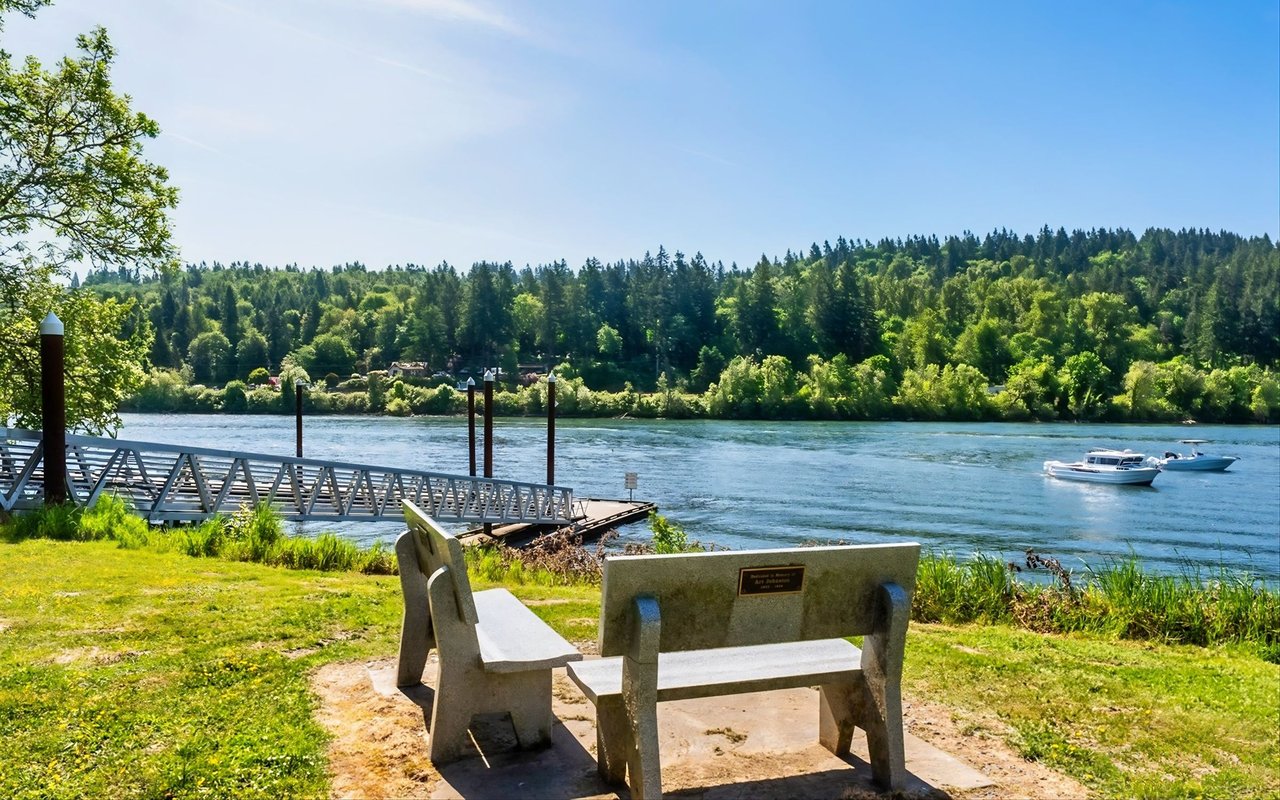
George Rogers Park is one of the city’s signature outdoor spaces and one of the easiest to recognize if you spend time near downtown. This 26-acre riverfront park in Old Town includes ballfields, a soccer field, a playground, tennis courts, trails, and access to the Willamette River.
If you want a park that combines open space, recreation, and a strong connection to the water, this is one of the top spots to know. It also anchors the southern end of the Highway 43 segment and links naturally with Old Town’s historic, close-in feel.
Foothills Park
Foothills Park offers a different kind of waterfront experience. This 9-acre riverfront park along the Willamette includes a pathway, viewing platform, Stafford Stones, a pavilion with fireplace, a reflecting pond, an amphitheater, and hand-carry boat access.
It feels more designed for strolling, gathering, and enjoying the riverfront setting. If you are drawn to the idea of being near downtown while still having immediate access to open-air public space, Foothills is an important part of that picture.
Roehr Park
Roehr Park is another key riverfront stop in the Foothills area. The 7.5-acre park includes viewing decks, lighted pathways, an amphitheater, access to the Charlie S. Brown Water Sports Center, a river boat access dock, and hand-carry boat access.
Together, Foothills Park and Roehr Park strengthen the sense that this part of Lake Oswego is closely tied to the public waterfront. For buyers looking at homes near downtown and the Foothills area, these parks help define the lifestyle.
Lake Oswego Swim Park
For summer lake access, Lake Oswego Swim Park is a city-run seasonal amenity at 250 Ridgeway Road. The city says it is open to residents in summer and includes lifeguards, inner tubes, water toys, and picnic tables.
It is worth noting that this is different from Lake Grove Swim Park, which is operated separately by the Lake Oswego School District. If lake access is part of your lifestyle wish list, knowing which access points are city-run and seasonal can be helpful.
Best parks for everyday use
Millennium Plaza Park and Rossman Park
If you enjoy a more urban park setting, Millennium Plaza Park is downtown’s central gathering space. Located at 1st and Evergreen, it offers views of Lakewood Bay along with a pergola, fireplace, reflecting pond, and paved plaza.
Nearby Rossman Park is much smaller at 0.6 acres, but spaces like this still matter. Small neighborhood parks can make downtown and nearby residential areas feel more walkable and connected on an everyday level.
Westlake Park
Westlake Park is the city’s premier athletic park. It includes lighted baseball and softball fields, soccer fields, tennis courts, basketball, and a covered playground.
For many households, this kind of park shapes weekly routines more than a scenic overlook does. If you are looking at the west side of Lake Oswego, Westlake Park is one of the clearest markers of active, neighborhood-centered outdoor living.
Waluga Parks
The Waluga park area offers a strong mix of active and casual recreation. Waluga Park East has 53 acres with turf fields and a playground, while West Waluga Park adds a paved walking path, nature trails, a fenced dog park, and adult fitness equipment.
That combination makes the area appealing for a wide range of routines. You can fit in a walk, use the path network, spend time outdoors with your household, or enjoy a more flexible neighborhood park experience.
Springbrook Park
Springbrook Park is a 52-acre natural area known for soft-surface trails and wildlife viewing. The city’s Uplands neighborhood plan describes it as the center of the neighborhood, which says a lot about its role in the surrounding area.
If you prefer a quieter, more natural setting over sports fields or formal plazas, Springbrook Park is one of the most important places to know. It gives this part of Lake Oswego a distinctly green, tucked-in feel.
Best hikes and natural trails
Cooks Butte and Stevens Meadow
If you want more of a hike than a casual neighborhood stroll, Cooks Butte and Stevens Meadow stand out. The city lists 2.37 miles of hiking here, with more noticeable elevation change than many other local trail options.
This area tends to appeal to people who want a more open-space-oriented experience. It is especially relevant on the Stafford and Luscher edge of Lake Oswego, where the outdoor feel shifts toward a more natural landscape.
Iron Mountain Trails
Iron Mountain offers 1.73 miles of trails and a shared pathway connection into downtown. That makes it useful if you want a natural setting without feeling far removed from everyday convenience.
It is one of the better examples of how Lake Oswego blends neighborhood access with outdoor recreation. You can enjoy a wooded trail experience while still staying connected to the city grid.
Stafford Basin and Rosemont Trail
The Stafford Basin Trail, also called the Rosemont Trail, runs 1.63 miles past Luscher Farm and toward the rural Stafford landscape. This route gives you a different side of Lake Oswego than the downtown waterfront or west-side athletic parks.
If your ideal outdoor time involves more space, a softer edge between city and countryside, and less structured recreation, this trail is worth exploring. It adds depth to the city’s overall park story.
Lake Oswego pathway loops
Lake Loop
The Lake Loop is the city’s most popular loop and covers 7 miles around Oswego Lake. For many people, this route captures the classic Lake Oswego experience because it ties together water views, established residential areas, and daily movement.
If you like the idea of longer walks or bike rides built into your week, this is one of the most useful route patterns to know. It is less about a single park and more about how the city connects.
Bryant and Palisades Loop
The Bryant and Palisades Loop stretches 6 miles and links the golf course, Lakeridge High School, Westridge School, Waluga Junior High, Bryant School, and a spur toward River Run. It is a practical example of the pathway system doing exactly what it was designed to do.
Rather than treating outdoor space as separate from daily life, this loop ties together neighborhood movement and key destinations. That can be a real plus if you value connected living.
West Lake Grove Loop
The West Lake Grove Loop runs 7 miles and links Southwood Park, Westlake Park, Waluga Park, and Lake Grove School. If you are comparing west-side neighborhoods, this loop helps explain why the area feels so functional for walking, biking, and regular park use.
It also reinforces the area’s strong neighborhood-park pattern. You are not relying on one single destination, because several parks and paths work together.
Country Club Loop
The Country Club Loop is a 5-mile route that circles Springbrook Park, Uplands School, and the Hunt Club. It gives the Uplands area a strong connection to natural space and local destinations.
For buyers drawn to quieter residential surroundings with easy outdoor access, this loop is part of the appeal. It supports a lifestyle that feels residential first, with nature close at hand.
Highway 43 Segment and Forest Hills School Pathway
The Highway 43 segment covers 2 miles between George Rogers Park and Glenmorrie. It is useful for understanding how the city extends south from the downtown riverfront.
The 3-mile Forest Hills School Pathway connects downtown, Forest Hills School, Tryon Creek State Park, and Lake Oswego High School. There is also the Old River Road Pathway, which begins in lower George Rogers Park and is mostly level, though the city notes that it does not provide river access.
How parks shape neighborhood feel
One of the most helpful ways to think about Lake Oswego is through its park and pathway patterns. The city officially recognizes 25 neighborhood associations, and several adopted neighborhood plans line up clearly with major parks and trails.
For example, Old Town connects naturally with George Rogers Park. Foothills is closely tied to Foothills Park and Roehr Park. Westlake relates strongly to Westlake Park and the West Lake Grove Loop, while Uplands is closely associated with Springbrook Park and the Country Club Loop.
Lake Grove and Waluga are shaped by the West Lake Grove Loop and the Waluga parks. Glenmorrie pairs with Glenmorrie Park and the Highway 43 segment. On the city’s southern and western edges, the Stafford and Luscher area links more closely with Cooks Butte, Stevens Meadow, and the Stafford Basin trail.
For homebuyers, this creates some clear lifestyle contrasts. Downtown and the riverfront tend to feel more centered on waterfront access, civic gathering spaces, and close-in movement. West-side areas feel strongly tied to active parks and connected neighborhood loops, while the south edge leans more toward open-space-oriented living.
What buyers should notice
If you are touring homes in Lake Oswego, it helps to look beyond the house itself and pay attention to how the nearby park system works. Ask whether the closest park is designed for active recreation, natural walking trails, riverfront access, or quick daily use.
You should also notice whether a home sits near one of the city’s main pathway loops. In Lake Oswego, that can shape how easy it feels to walk, bike, or connect to parks and other destinations without planning a full outing.
Finally, think about the kind of outdoor routine you want. Some buyers want easy access to downtown waterfront parks and plazas, while others prefer athletic fields, natural trails, or a quieter edge near larger open spaces.
If you are weighing which part of Lake Oswego fits your lifestyle best, local insight can make that decision much clearer. Lisa Hanna can help you compare neighborhoods, parks, and home options with a strategy tailored to how you want to live.
FAQs
What are the most popular parks in Lake Oswego for waterfront access?
- George Rogers Park, Foothills Park, and Roehr Park are three of the city’s best-known waterfront parks, each with access to the Willamette River and different features for walking, gathering, or boating.
What is the main trail loop system in Lake Oswego?
- Lake Oswego has five main pathway loops totaling 23.7 miles, including the Lake Loop, Bryant and Palisades Loop, West Lake Grove Loop, Country Club Loop, and other connecting segments.
Which Lake Oswego parks are best for hiking?
- Cooks Butte and Stevens Meadow, Iron Mountain Trails, and the Stafford Basin or Rosemont Trail are some of the city’s strongest options for a more hike-oriented outdoor experience.
Which Lake Oswego neighborhoods connect well to parks and trails?
- City materials show strong park and trail connections in Old Town, Foothills, Westlake, Uplands, Glenmorrie, and the Lake Grove and Waluga areas.
Is there public lake access in Lake Oswego during summer?
- The city says Lake Oswego Swim Park is a seasonal, resident-access swim area in summer with lifeguards, water toys, inner tubes, and picnic tables.